

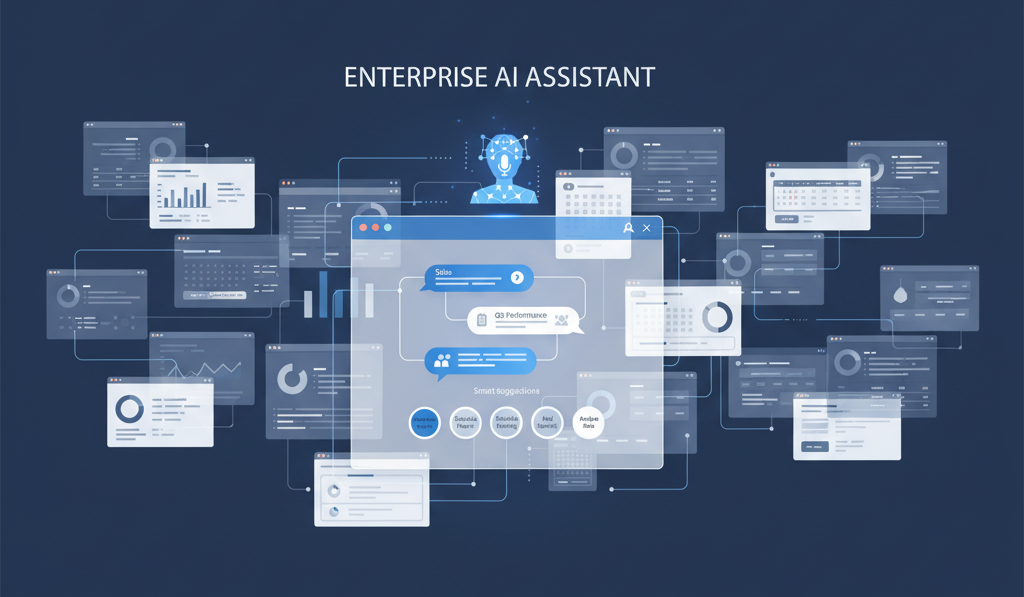

Businesses today are drowning in applications, dashboards, screens, and processes. Employees spend too much time navigating menus, searching for data, and performing routine tasks that should be faster. Oracle Digital Assistant (ODA) changes this by introducing conversational AI into the enterprise. Instead of opening multiple screens, users can simply ask the system for what they need.
ODA brings a simple idea to life: let people interact with enterprise systems the same way they interact with messaging apps. This blog explores how ODA works, why enterprises are adopting it, and how Faramond helps organizations deploy smart digital assistants that actually solve business problems.
What Is Oracle Digital Assistant?
Oracle Digital Assistant is an AI-powered chatbot and voice assistant platform that integrates natively with Oracle Fusion Applications, Oracle Integration Cloud, databases, and third-party systems. It allows users to complete tasks through conversational interfaces—on mobile, web, WhatsApp, MS Teams, Slack, or custom portals.
ODA supports:
- Natural Language Understanding (NLU)
- AI-driven intent detection
- Prebuilt skills for Oracle Fusion (ERP, HCM, SCM, CX)
- Custom business skills built using REST APIs
- Workflow automation
- Integration with enterprise identity and security
Why Enterprises Need a Digital Assistant
Employees often spend significant time searching for information or performing repetitive tasks. HR wants payslips, vendors want payment status, managers want approvals, customers want order updates. Most of these tasks do not need a human—they just need data.
ODA reduces this friction by letting users interact with the system naturally:
“Show my pending approvals.”
“Download my payslip.”
“Update my supplier bank details.”
“Check order status.”
“Raise a support ticket.”
The assistant fetches real data, applies business rules, and completes the task instantly.
Where Oracle Digital Assistant Delivers Real Value
HR & Employee Self-Service
- Payslip download
- Leave balance and leave application
- Attendance corrections
- Policy FAQs
Finance & Procurement
- Supplier invoice status
- Payment due updates
- PO approval
- Expense submission
Supply Chain & Manufacturing
- Order tracking
- Inventory checks
- Delivery updates
- Production queries
IT & Operations
- Password reset
- Asset request
- Ticket status
- Incident reporting
ODA becomes the first point of contact for employees, partners, and customers—reducing workload on support teams.
Why Engineers Like ODA
Prebuilt Fusion Skills
Oracle provides ready-to-use conversational skills for ERP and HCM.
Powerful Integration
Integrates with Fusion, OIC, APEX apps, databases, and REST services.
Flexible Customization
Developers can build custom skills with JSON workflows, JavaScript functions, and AI models.
Multichannel Deployment
Once built, the assistant can run on web, mobile, Teams, Slack, WhatsApp, or kiosks.
Built-In Security
ODA works with IDCS, OAuth, SSO, and enterprise-level authentication.
Business Benefits of Implementing ODA
Faster Response Time
Employees and customers get information instantly.
Lower Support Cost
Reduces load on HR, finance, and IT helpdesks.
Better User Experience
Users interact naturally, without navigating complex menus.
Higher Productivity
ODA automates repetitive tasks and approvals.
Consistent Answers
AI-driven responses ensure accuracy and compliance.
How Faramond Helps Organizations Implement ODA
Faramond builds end-to-end digital assistant solutions:
- Implementing Oracle’s prebuilt HCM/ERP/SCM skills
- Building custom business skills for specific workflows
- Integrating ODA with Fusion, OIC, databases, and on-prem apps
- Designing conversation flows and smart intents
- Deploying assistants across web, mobile, Teams, and portals
- Providing ongoing training and monitoring to improve accuracy
ODA becomes a practical and powerful AI layer on top of your enterprise systems.
Conclusion
Oracle Digital Assistant brings simplicity, speed, and intelligence to everyday business tasks. It helps employees, customers, and partners get information instantly without navigating complex systems. With the right design and integrations, ODA can transform user experience across the enterprise.